
← All case studies
AI as a Platform Capability
AI that already knows the business
Designing AI as a shared capability across the platform, powered by persistent business context, rather than a set of disconnected features.
My role
Design lead for AI experiences
Team
Me + 1 designer, with product owners
Hands-on
Business context page, AI listing content
Platform
Web
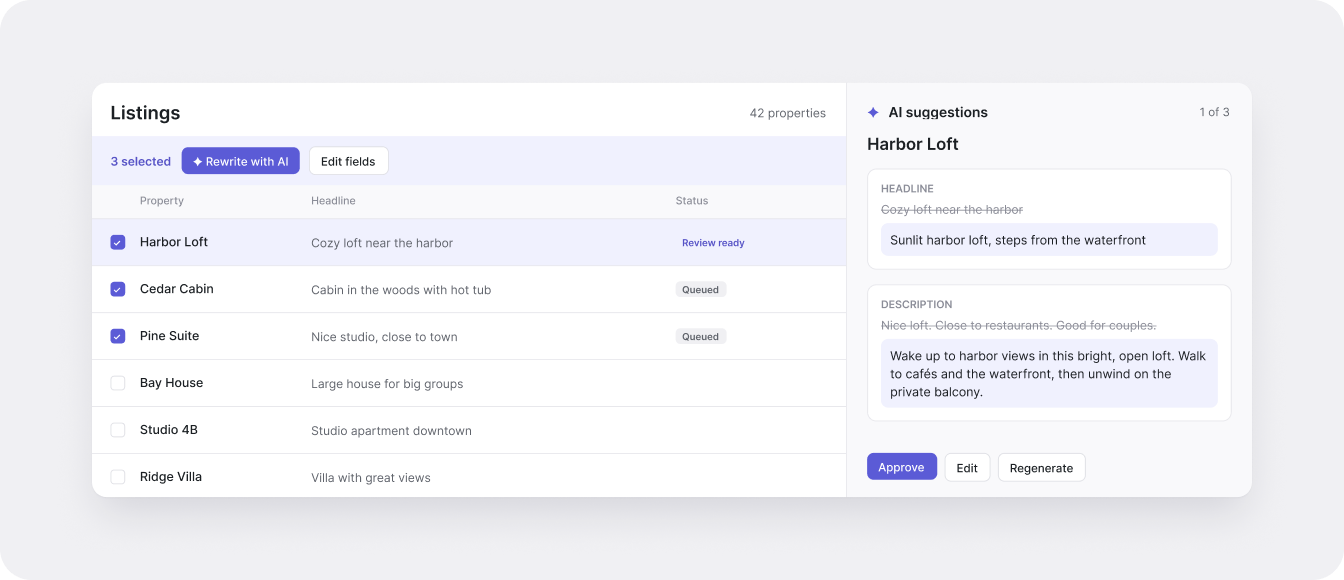
Visuals are original illustrations created for this portfolio and do not depict proprietary product screens.
Every AI feature started from zero
Without shared context, every AI interaction asks users to explain their business again: who they are, how they sound, who they host. The output arrives generic, and the editing falls back on the user.
One source of truth. Context everywhere.
I designed a central business context page: the place where a business teaches the platform’s AI assistant how it works, from its markets and seasonality to its writing style and do’s and don’ts. Whenever someone uses AI anywhere in the platform, that context comes with it, so every draft starts from what the business has already said.
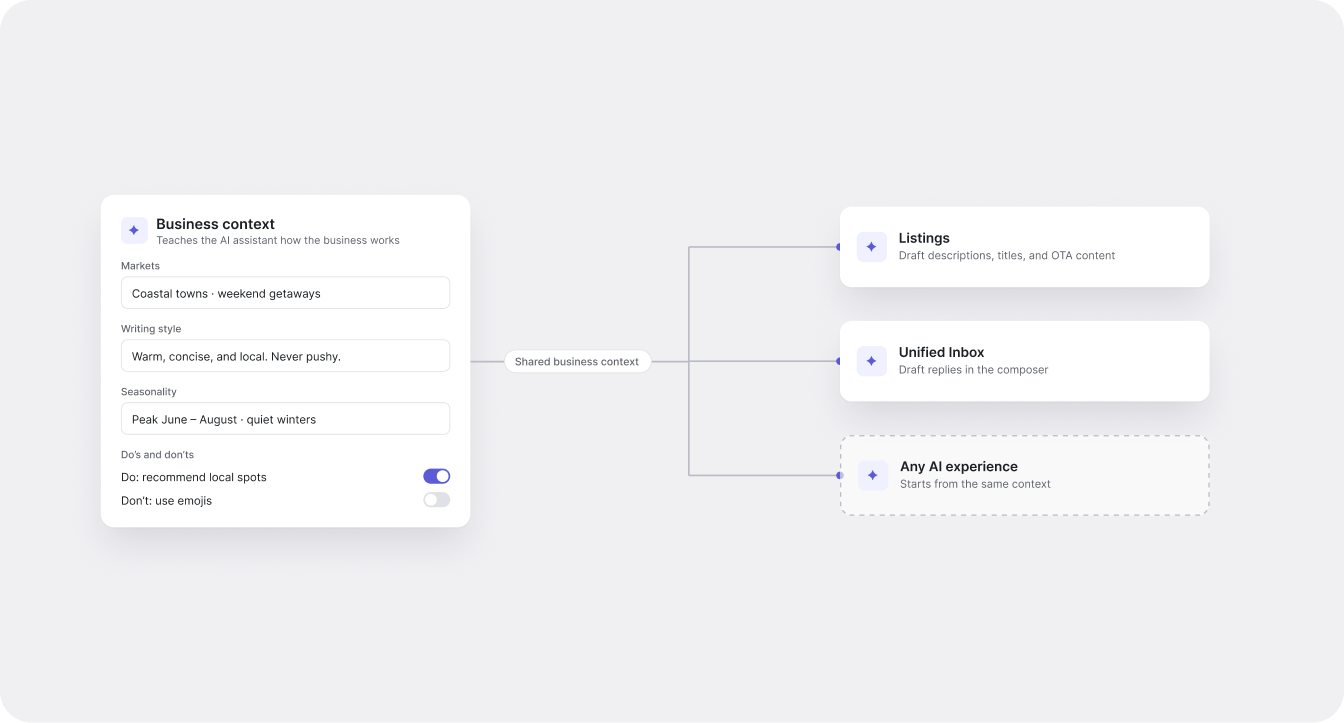
One source of business context, shared by every AI experience.
AI where the work already happens
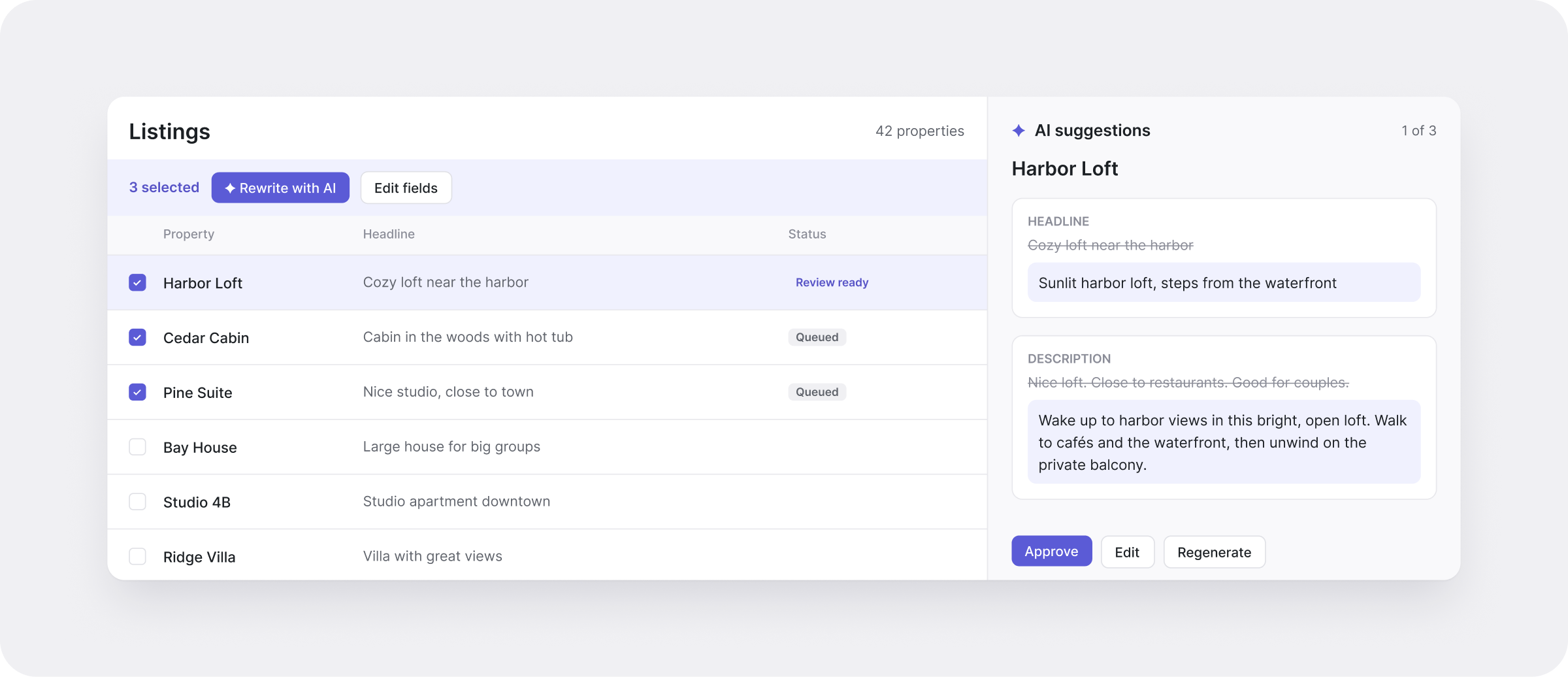
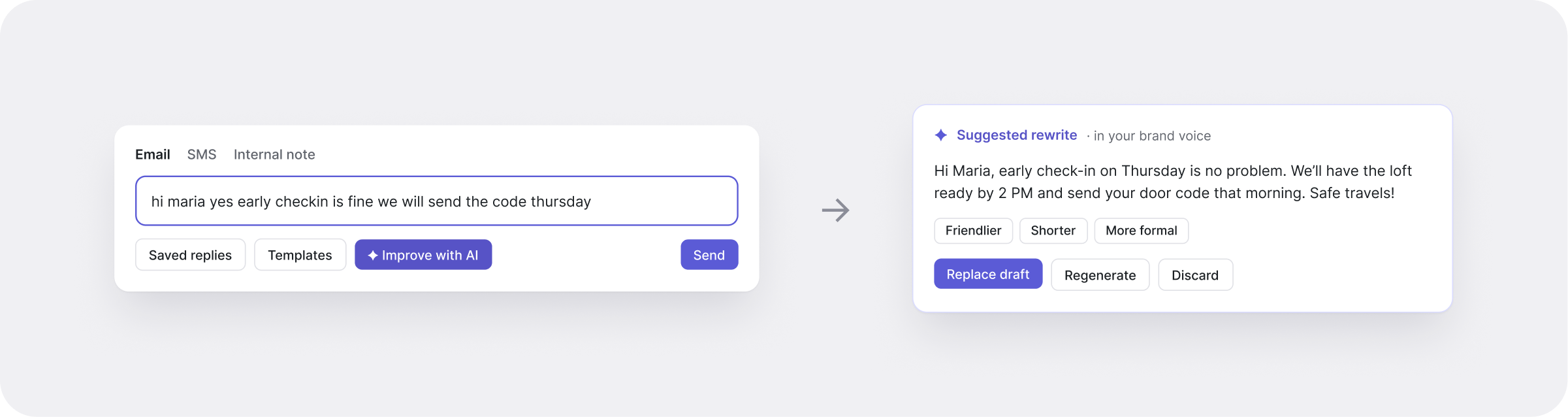
For listings, AI drafts descriptions, titles, and OTA content, and users can update listing fields in bulk. In the Unified Inbox, AI drafts replies inside the composer. Each experience lives inside a workflow people already use, instead of sending them to a separate AI tool.
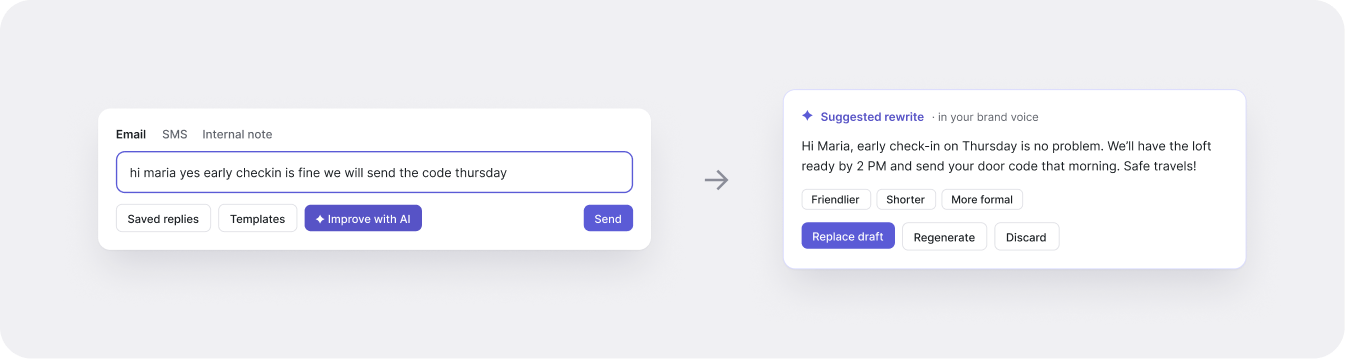
AI suggests. People decide.
The same pattern applies everywhere: AI drafts, people review, edit or regenerate, and approve before anything changes. Consistent controls make AI predictable, wherever it appears.
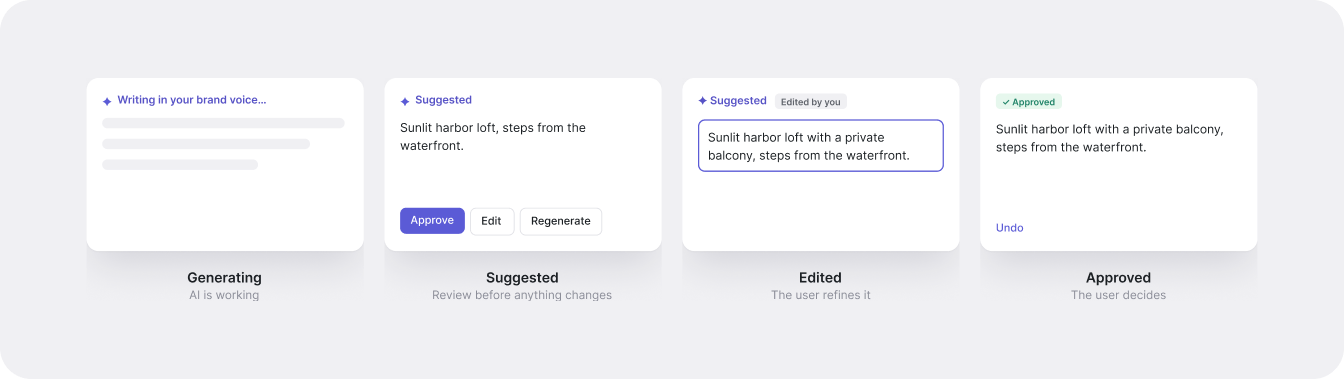
One set of controls for every AI experience.
Teach it once. Use it everywhere.
Clients asked for these capabilities directly, and client beta testers and usability sessions shaped how they work. The response has been very positive, especially to teaching the AI about their business once, then putting it to work in the inbox and on bulk listing updates.
Leading the AI experiences
I led design for the platform’s AI experiences, working with product owners on direction. I designed the business context page and the AI listing content experience end to end, and directed a designer on my team on AI in the Unified Inbox.
AI shouldn’t be a button. It should be a capability the whole product shares.
Next case study
Consistency without uniformity. →

Product design leader. Design functions,
systems, and products for complex SaaS.
© 2026 Alina Dohotaru
Visuals are original illustrations and do not depict proprietary product screens.
AI as a Platform Capability
AI that already knows the business
Designing AI as a shared capability across the platform, powered by persistent business context, rather than a set of disconnected features.
My role
Design lead for AI experiences
Team
Me + 1 designer, with product owners
Hands-on
Business context page, AI listing content
Platform
Web
Visuals are original illustrations created for this portfolio and do not depict proprietary product screens.
Every AI feature started from zero
Without shared context, every AI interaction asks users to explain their business again: who they are, how they sound, who they host. The output arrives generic, and the editing falls back on the user.
One source of truth. Context everywhere.
I designed a central business context page: the place where a business teaches the platform’s AI assistant how it works, from its markets and seasonality to its writing style and do’s and don’ts. Whenever someone uses AI anywhere in the platform, that context comes with it, so every draft starts from what the business has already said.
One source of business context, shared by every AI experience.
AI where the work already happens
For listings, AI drafts descriptions, titles, and OTA content, and users can update listing fields in bulk. In the Unified Inbox, AI drafts replies inside the composer. Each experience lives inside a workflow people already use, instead of sending them to a separate AI tool.
AI suggests. People decide.
The same pattern applies everywhere: AI drafts, people review, edit or regenerate, and approve before anything changes. Consistent controls make AI predictable, wherever it appears.
One set of controls for every AI experience.
Teach it once. Use it everywhere.
Clients asked for these capabilities directly, and client beta testers and usability sessions shaped how they work. The response has been very positive, especially to teaching the AI about their business once, then putting it to work in the inbox and on bulk listing updates.
Leading the AI experiences
I led design for the platform’s AI experiences, working with product owners on direction. I designed the business context page and the AI listing content experience end to end, and directed a designer on my team on AI in the Unified Inbox.
AI shouldn’t be a button. It should be a capability the whole product shares.
Next case study
Consistency without uniformity. →
Product design leader. Design functions, systems, and products for complex SaaS.
© 2026 Alina Dohotaru
Visuals are original illustrations and do not depict proprietary product screens.
← All case studies
AI as a Platform Capability
AI that already knows the business
Designing AI as a shared capability across the platform, powered by persistent business context, rather than a set of disconnected features.
My role
Design lead for AI experiences
Team
Me + 1 designer, with product owners
Hands-on
Business context page, AI listing content
Platform
Web
Visuals are original illustrations created for this portfolio and do not depict proprietary product screens.
Every AI feature started from zero
Without shared context, every AI interaction asks users to explain their business again: who they are, how they sound, who they host. The output arrives generic, and the editing falls back on the user.
One source of truth. Context everywhere.
I designed a central business context page: the place where a business teaches the platform’s AI assistant how it works, from its markets and seasonality to its writing style and do’s and don’ts. Whenever someone uses AI anywhere in the platform, that context comes with it, so every draft starts from what the business has already said.
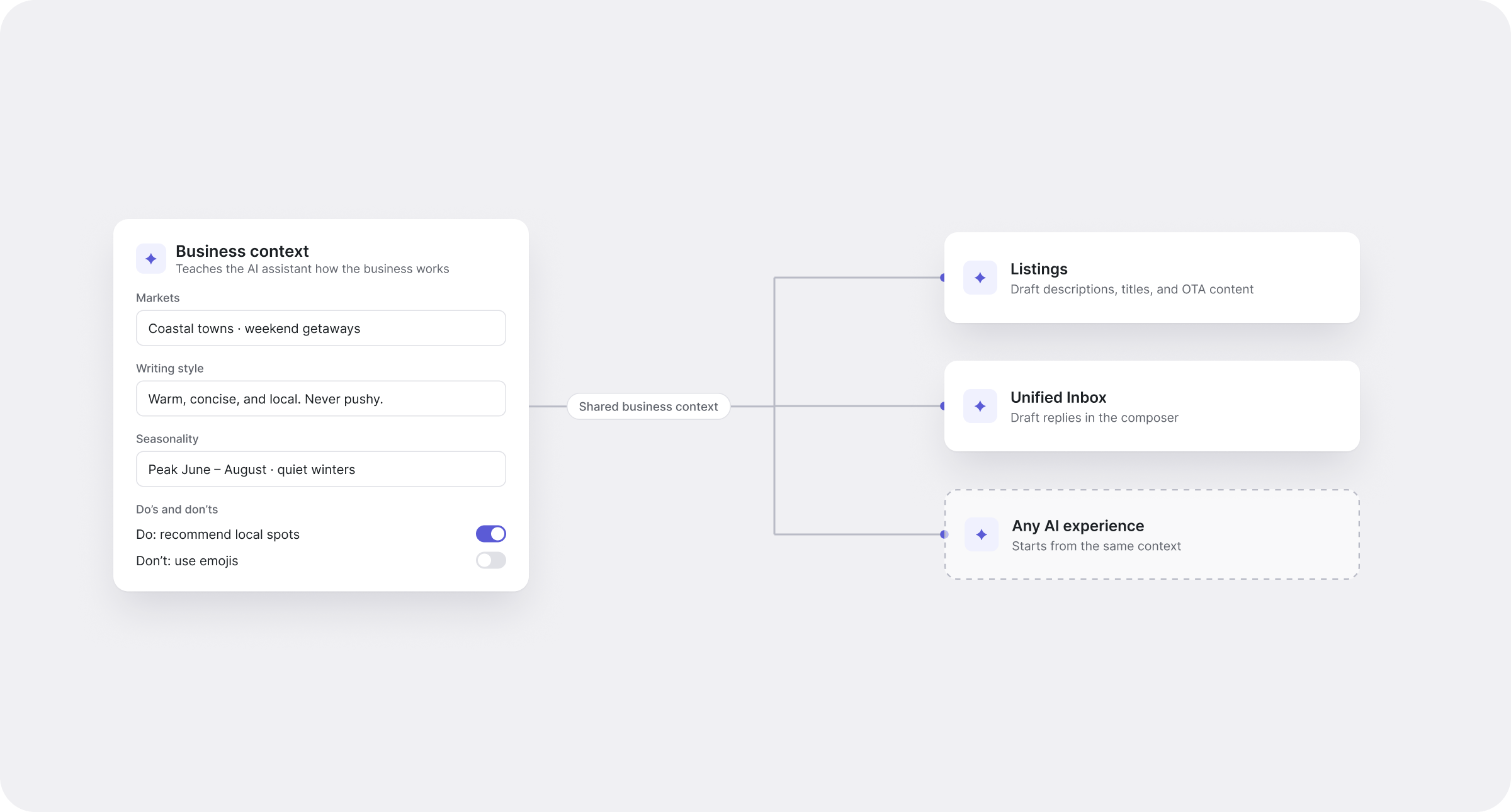
One source of business context, shared by every AI experience.
AI where the work already happens
For listings, AI drafts descriptions, titles, and OTA content, and users can update listing fields in bulk. In the Unified Inbox, AI drafts replies inside the composer. Each experience lives inside a workflow people already use, instead of sending them to a separate AI tool.
AI suggests. People decide.
The same pattern applies everywhere: AI drafts, people review, edit or regenerate, and approve before anything changes. Consistent controls make AI predictable, wherever it appears.
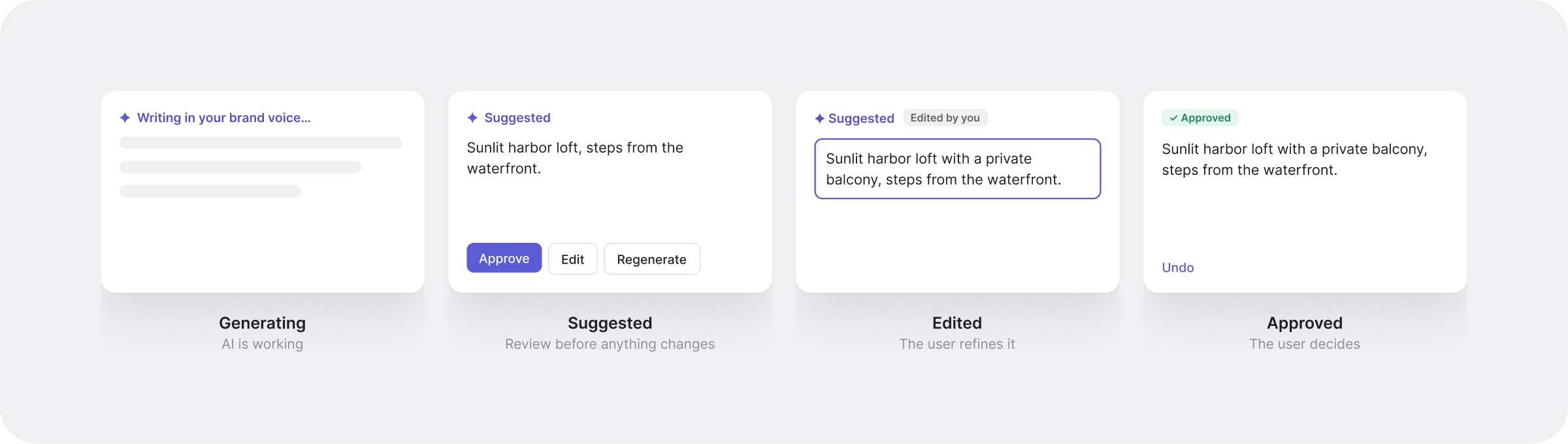
One set of controls for every AI experience.
Teach it once. Use it everywhere.
Clients asked for these capabilities directly, and client beta testers and usability sessions shaped how they work. The response has been very positive, especially to teaching the AI about their business once, then putting it to work in the inbox and on bulk listing updates.
Leading the AI experiences
I led design for the platform’s AI experiences, working with product owners on direction. I designed the business context page and the AI listing content experience end to end, and directed a designer on my team on AI in the Unified Inbox.
AI shouldn’t be a button. It should be a capability the whole product shares.
Next case study
Consistency without uniformity. →
Product design leader. Design functions,
systems, and products for complex SaaS.
© 2026 Alina Dohotaru
Visuals are original illustrations and do not depict proprietary product screens.